
LE ARTISTE DI “WOMEN FOR JUSTICE”
BIOGRAFIA DI SAHRAA KARIMI
Sahraa Karimi è una regista afgana che ha vissuto e studiato in Iran fino all’età di 16 anni. Per la prima volta, all’età di quattordici anni, ha recitato nel film Le figlie del sole di Maryam Shahriar, in uno dei ruoli principali. Con questo film è entrata nel mondo del cinema professionale iraniano. È stata la prima ragazza immigrata afgana a recitare un ruolo da co-protagonista nel cinema iraniano. Con la sua seconda esperienza di recitazione in White Sleep di Hamid Jebeli – importante regista iraniano – si è interessa ancora maggiormente all’arte del cinema. All’età di 17 anni Sahraa Karimi emigrò nella Repubblica Slovacca per continuare i suoi studi. Lì ha studiato per più di dieci anni nel campo del cinema. (Registra di documentari e fiction). Come prima donna nella storia dell’Afghanistan, ha conseguito un diploma accademico (PhD) in cinema presso l’Accademia di musica e arti dello spettacolo – Facoltà di cinema e TV di Bratislava, in Slovacchia.
Sahraa Karimi ha realizzato più di 30 cortometraggi di fiction e documentari durante i suoi studi, alcuni dei quali hanno vinto numerosi premi in festival cinematografici internazionali. Il suo film, Afghan Women behind the wheel, è stata la sua prima esperienza cinematografica nel cinema documentario in Afghanistan. Il film ha partecipato a 22 festival cinematografici e ha vinto più di 5 premi internazionali nei principali festival di tutto il mondo, tra cui la nomination come miglior documentario dell’anno nella Repubblica di Slovacchia, è stato trasmesso anche sulle principali reti televisive europee tra cui Arte France e BBC. Parlika- A Woman in the Land of Men, un film ispirato alla vita della signora Soraya Parlika, un’attivista per i diritti delle donne in Afghanistan, offre uno sguardo approfondito alla storia di quattro decenni di violenza contro le donne in Afghanistan. Ha vinto il miglior film documentario nella categoria Donne cineaste al Dhaka-Bangladesh International Film Festival.
Sahraa Karimi è stata la prima regista donna afghana a diventare un membro ufficiale dell’Accademia slovacca di cinema e televisione, dopo aver vinto lo Slovak Film and Television Academy Award con il film Light Breez. Il diario di una ragazza immigrata, che è stato presentato in anteprima mondiale al Festival del Cinema Mostra di Venezia ed è stato nominato come Miglior Film nella Official Competition Horizons. Il suo film Hava, Maryam, Ayesha ha ricevuto il premio come miglior attore per tutte e tre le attrici del film dal Los Angeles Asian Film Festival e dal Dhaka International Film Festival Bangladesh. Hava, Maryam, Ayesha ha partecipato a più di 38 festival cinematografici internazionali per conto dell’Afghanistan. Ha rappresentato il primo accesso dell’Afghanistan all’Oscar nel 2020 ed è stato l’unico film del cinema afghano proiettato nelle sale in Iran per cinque mesi. Sahraa Karimi è stata anche la prima donna nella storia dell’Afghanistan a diventare General Director of Afghan Film, dichiarata organizzazione cinematografica attraverso un processo di merito nel 2019. Attualmente sta lavorando alla sua prossima fiction Volo da Kabul.
Sahraa Karimi is an Afghan film director who lived and studied in Iran until she was 16 years old. For the first time at the age of fourteen, she starred in a movie Daughters of the Sun by Maryam Shahriar as one of the leading roles. With this movie she entered the world of Iranian professional cinema. She was the first Afghan immigrant girl to play a leading role in Iranian cinema. With her second acting experience in White Sleep by Hamid Jebeli – prominent Iranian film director- she became more interested in the art of cinema. At the age of 17 Sahraa Karimi immigrated to the Slovak Republic for the continuing of her study. She studied there for more than ten years in the cinema field. (Documentary and fiction filmmaking). As the first woman in Afghanistan history, she holds an academic degree (PhD) in cinema from Academy of Music and Performing Arts- Film and TV Faculty in Bratislava, Slovakia.
Sahraa Karimi has made more than 30 short fiction and documentary films during her study, some of which have won numerous awards at international film festivals. Her film, Afghan Women behind the wheel, was her first feature film experience in documentary cinema in Afghanistan. The film participated in 22 film festivals and won more than 5 international awards at major festivals around the world, including being nominated for Best Documentary of the Year in the Republic of Slovakia, it has also broadcasted on major European television networks including Arte France and the BBC. Parlika- A Woman in the Land of Men, a film inspired by the life of Mrs. Soraya Parlika, a women’s rights activist in Afghanistan, takes a deep look at the history of four decades of violence against women in Afghanistan. It won the best documentary film in Women filmmakers’ category at Dhaka-Bangladesh International Film Festival.
Sahraa Karimi, has become the first female filmmaker from Afghanistan to become an official member of the Slovak Academy of Film and Television, after winning the Slovak Film and Television Academy Award for the film Light Breez, a diary of an immigrant girl. its world premiere at the 76th Venice International Film Festival and was nominated for Best Film in the Official Competition Horizons. Her film Hava, Maryam, Ayesha received the Best Actor Award for all three actresses of the movie from the Los Angeles Asian Film Festival and the Dhaka International Film Festival Bangladesh. Hava, Maryam, Ayesha has participated in more than 38 international film festivals on behalf of Afghanistan. It was Afghanistan’s entry in Oscar 2020 and the only film from Afghanistan cinema that has been in theatres in Iran for five months. Sahraa Karimi is also the first women in the history of Afghanistan who became The General Director of Afghan film, stated owned film organization through merit process in 2019. She is currently working on her next fiction film ” flight from Kabul”.
Testimonianza dell’artista
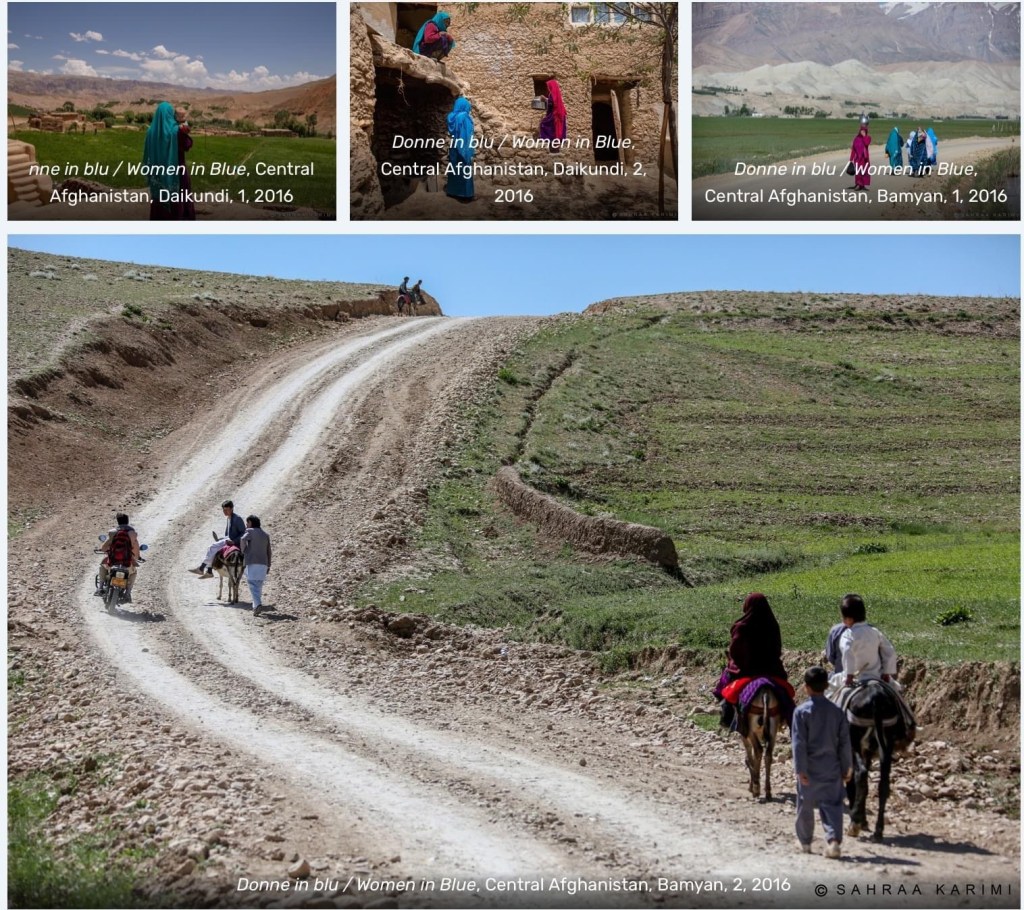
Le foto esposte sono tratte dalla collezione “Frammenti di vite vissute”. In tempi che non hanno precedenti a livello globale, le donne afghane sono ancora una volta a un bivio, fronteggiando scelte difficili per sostenere e portare avanti l’essenza stessa della vita. Negli ultimi 20 anni le donne afghane e, in particolare, una generazione fortunata e straordinariamente brillante di giovani ragazze, hanno raggiunto obiettivi lodevoli in tutti i ceti sociali. Mentre milioni di persone attendono con ansia di sapere cosa sarà della loro vita futura in Afghanistan, è già evidente come le donne e le ragazze afghane siano per ora l’unica grande categoria soggetto a restrizioni estreme.
La collezione “Frammenti di vite vissute” raccoglie le immagini di donne afghane che sono state catturate durante i miei viaggi in vari province in Afghanistan. Ho voluto catturare la bellezza nella vita reale, così come la storia e la forza delle donne afghane. L’archivio è composto da più di 10.000 foto e offre un inedito approfondimento sulla vita delle donne afgane che vivono sia in aree urbane che rurali dell’Afghanistan.
Amidst unprecedented times globally, Afghan women are once again at a crossroads, facing difficult choices to sustain and carry on the very essence of life. Over the past 20 years, Afghan women and, in particular, a fortunate and extraordinarily bright generation of young girls, have achieved laudable goals across all walks of life. While millions of people eagerly await what will be of their future life in Afghanistan, it is already clear that Afghan women and girls are for now the only large category subject to extreme restrictions.
The “Fragments of lived lives” collection collects images of Afghan women who have been captured during my travels in various provinces in Afghanistan. I wanted to capture beauty in real life, as well as the history and strength of Afghan women. The archive is made up of more than 10,000 photos and offers an unprecedented insight into the life of Afghan women living in both urban and rural areas of Afghanistan.
 A2030OdV
Lascia un commento