
Le voci di WOMEN for Justice
Testimonianza di Pascale Goldenberg
PROGETTO GULDUZI
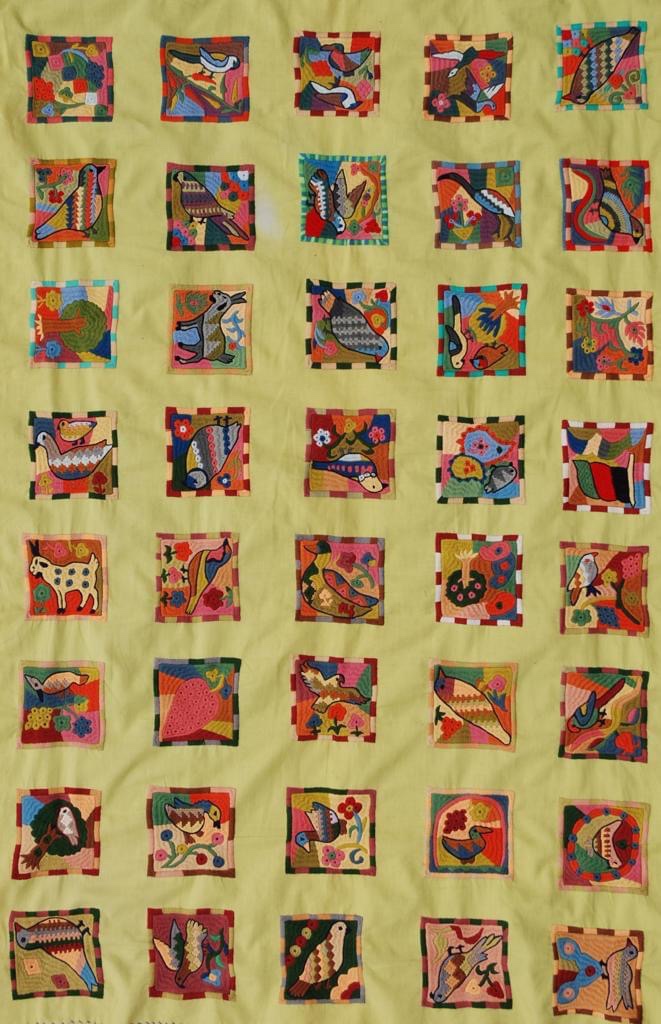
Molte delle donne che vivono nelle zone rurali dell’Afghanistan sono ricamatrici altamente qualificate. La DAI (Iniziativa tedesco-afghana di Friburgo) mira a fornire loro l’opportunità di generare un reddito utilizzando le loro abilità di ricamo. Allo stesso tempo DAI auspica che questi progetti aiutino a salvaguardare dalla scomparsa delle tradizionali abilità di ricamo a mano. Vorremmo che queste piccole opere d’arte ricamate diventassero note al di fuori dell’Afghanistan affinché le persone possano divertirsi, trarre ispirazione e acquistare. Quando persone in altre parti del mondo incorporano questi ricami nel proprio lavoro tessile, due culture si connettono.
Sebbene molte delle ricamatrici nei villaggi siano consapevoli di far parte di un mondo più ampio, si rileva in loro un forte senso di identità nazionale che si riflette nella scelta di rappresentare mappe e bandiere tra i soggetti del ricamo. Osservando l’opera, il visitatore impara a conoscere i tre colori della bandiera afgana e come si scrive il nome del paese con i caratteri persiani. In farsi e anche in pashto – le due lingue ufficiali in Afghanistan – ‘gul’ significa fiore, e in farsi ‘dusi’ significa ricamo. Il termine ‘guldusi’ è usato dalle donne per i ricami in genere. Per questo abbiamo scelto il nome GULDUSI per il nostro progetto e sito web, augurando ai nostri visitatori una piacevole passeggiata nel giardino dei ricami. Le ‘nostre’ ricamatrici, riferendosi ai loro quadrati ricamati, parlano di ‘gul’, dicendo che hanno ricamato “tanti fiori”. Esistono diverse tipologie di ricamo, ma anche molte nomenclature locali diverse, praticamente un nome diverso per ogni motivo, a seconda del villaggio di provenienza della ricamatrice.
I villaggi di Laghmani. Il primo progetto di ricamo è stato sviluppato a Laghmani, una regione composta da un gruppo di diversi villaggi e si trova a circa 60 km a nord di Kabul, nella pianura nord (Shomali), nella provincia di Parwan. La DAI (Iniziativa tedesco-afghana) sostiene progetti nella pianura di Shomali dal 2002. Un centro femminile a Laghmani-hat offre alle vedove corsi semestrali di sartoria e cucito. Il progetto di ricamo è stato sviluppato all’interno di questo progetto.
Nel 2003 due donne che ancora praticavano il ricamo a mano sono state assunte come insegnanti per sei mesi offrendo ad altre donne interessate l’opportunità di apprendere o aggiornare le abilità. Da allora, le donne ricamano a casa nel proprio cortile. Il loro compito era ricamare piccoli quadrati (8 cm x 8 cm) con motivi e colori a loro scelta. I materiali (tessuti e fili da ricamo) sono stati forniti dalla nostra organizzazione. Nel 2004 è arrivato a Friburgo il primo drappo pieno di quadrati ricamati. Nel 2005 ho intrapreso il mio primo viaggio in Afghanistan per incontrare le donne. Oggi il progetto coinvolge circa 200 ricamatrici.
Many of the women living in rural areas of Afghanistan are highly skilled embroiderers. The DAI (German-Afghan Initiative from Freiburg) aims to provide opportunities for them to generate an income using their embroidery skills. At the same time we hope that these projects will help to safeguard traditional hand embroidery skills from disappearing.
We would like these small embroidered works of art to become known beyond Afghanistan for people to enjoy, get inspired by and purchase. When people in other parts of the world incorporate these embroideries into their own textile work, two cultures become connected.
While many of the embroiderers in the villages are aware that they are part of a larger world, they have a strong sense of their own national identity reflected in the appearance of maps and flags among the images. Looking at the work, the visitor learns about the three colors of the Afghan flag and how the name of the country is spelled in Farsi.
In Farsi and also in Pashto – the two official languages in Afghanistan – ‘gul’ means flower, and in Farsi ‘dusi’ means embroidery. The term ‘guldusi’ is used by the women for all kinds of embroideries or types of embroideries, thus for embroidery in general. Therefore we chose the name GULDUSI for our project and website. We wish you a pleasant walk through the garden of embroideries. ‘Our’ embroiderers in the villages when referring to the squares talk about having embroidered many ‘gul’. There are main categories of types of embroidery, but in addition they use many different names, virtually one for each pattern, depending on the village and the woman.
The villages in Laghmani. The first embroidery project was developed in Laghmani, a region consisting of a group of several villages and is located approximately 60 km north of Kabul in the Shomali plain in Parwan province. The DAI (German-Afghan Initiative) has been supporting projects in the Shomali plain since 2002 a women’s center in Laghmani hat offers widows six months courses in dressmaking and sewing. The embroidery project was developed within this project.
In 2003, two women who still practiced hand embroidery were employed as teachers for six months offering other interested women the opportunity to learn or refresh the skills. Since then, the women have been embroidering at home in their own yard. Their brief was to embroider small squares (8cm x 8cm) with motifs and colors of their choice. Materials (fabrics and embroidery threads) were provided by our organization. In 2004, the first cloth filled with embroidered squares arrived in Freiburg. In 2005, I. undertook my first journey to Afghanistan to meet the women. Actually, they are about 200 embroiderer.
 A2030OdV
Lascia un commento